
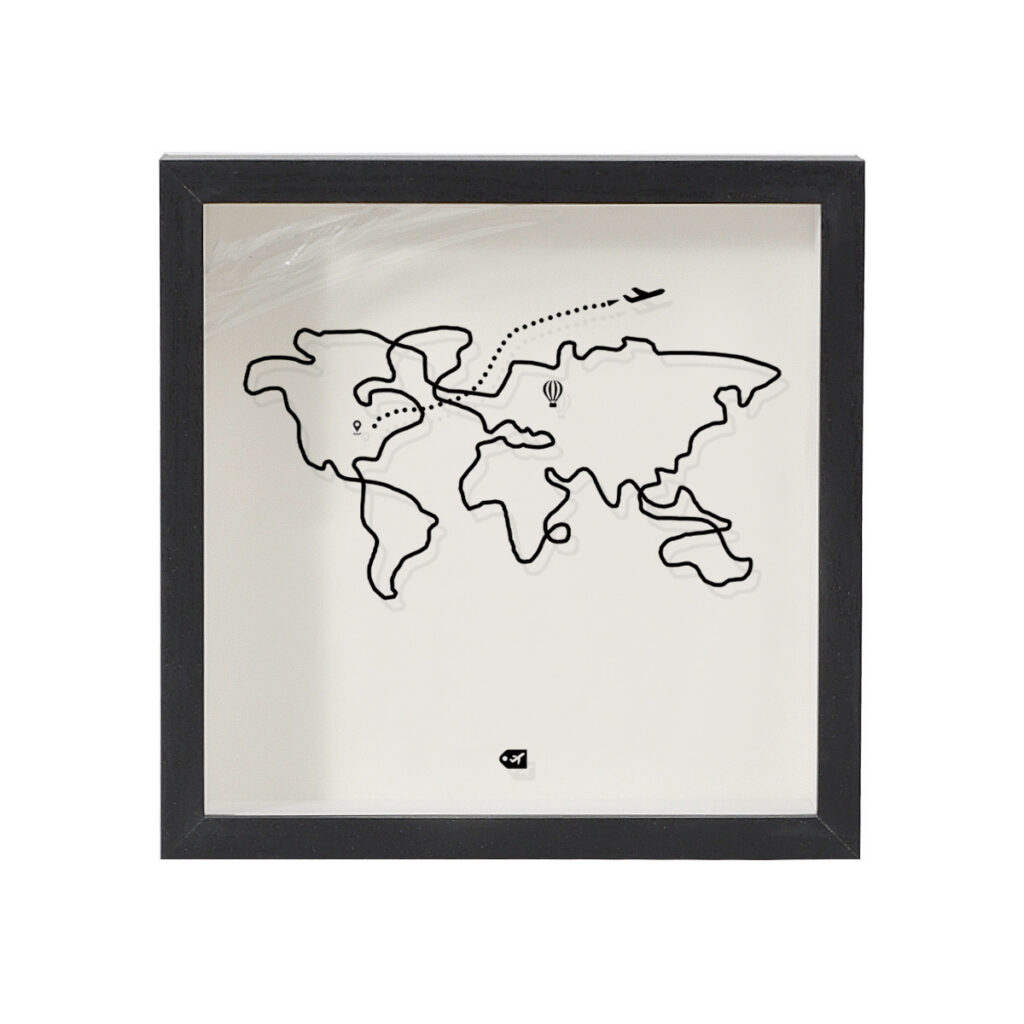
Ticket Frame Artwork: Separate the Printed Layers
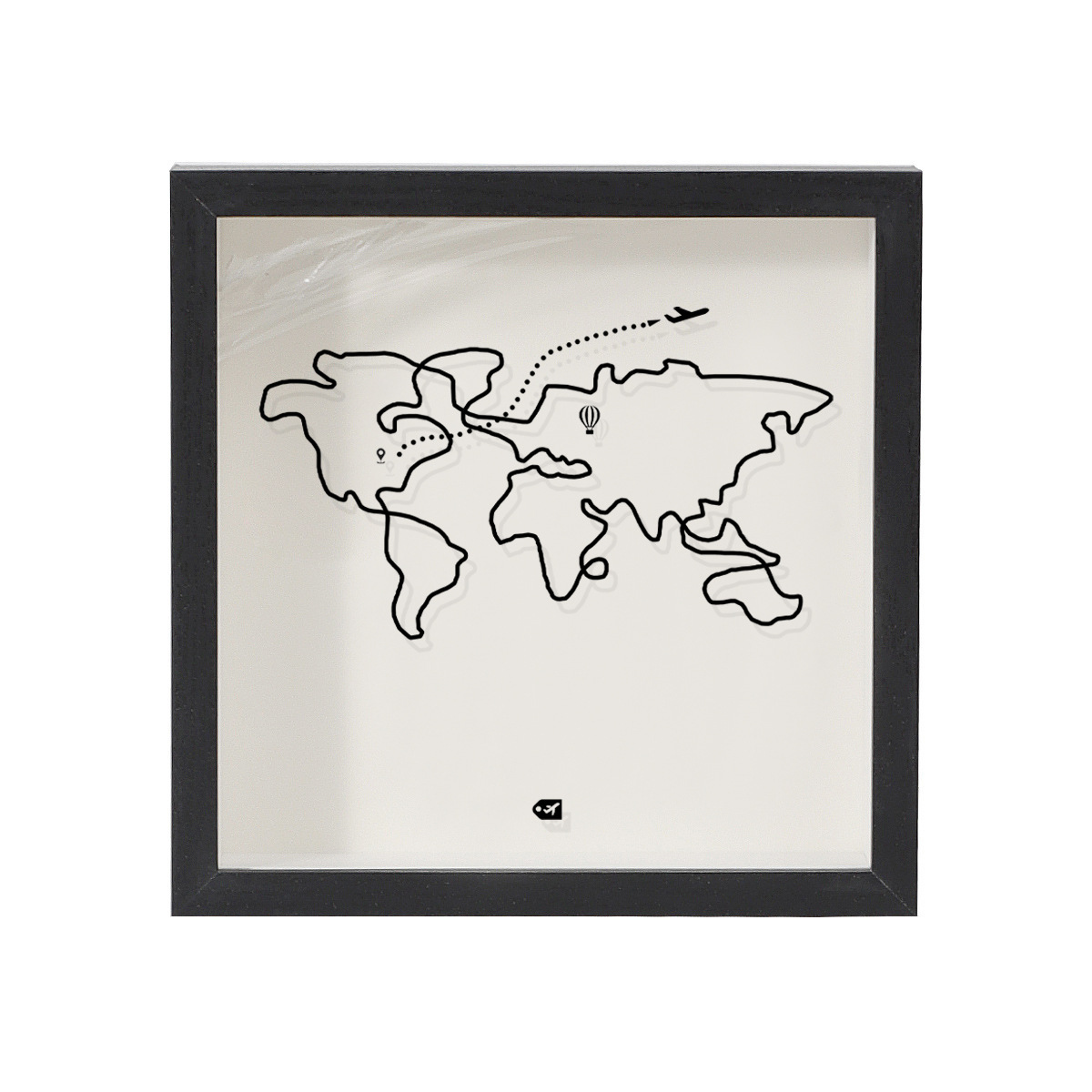
A ticket frame artwork master should identify which physical surface carries each graphic, the side from which it is viewed and the separate background or insert involved. Link the supplier proof to one design revision and the actual offered frame. Do not infer the printing layer from a front catalogue view: a dark map can appear in front of the background without establishing the print process, its surface or its reverse appearance.
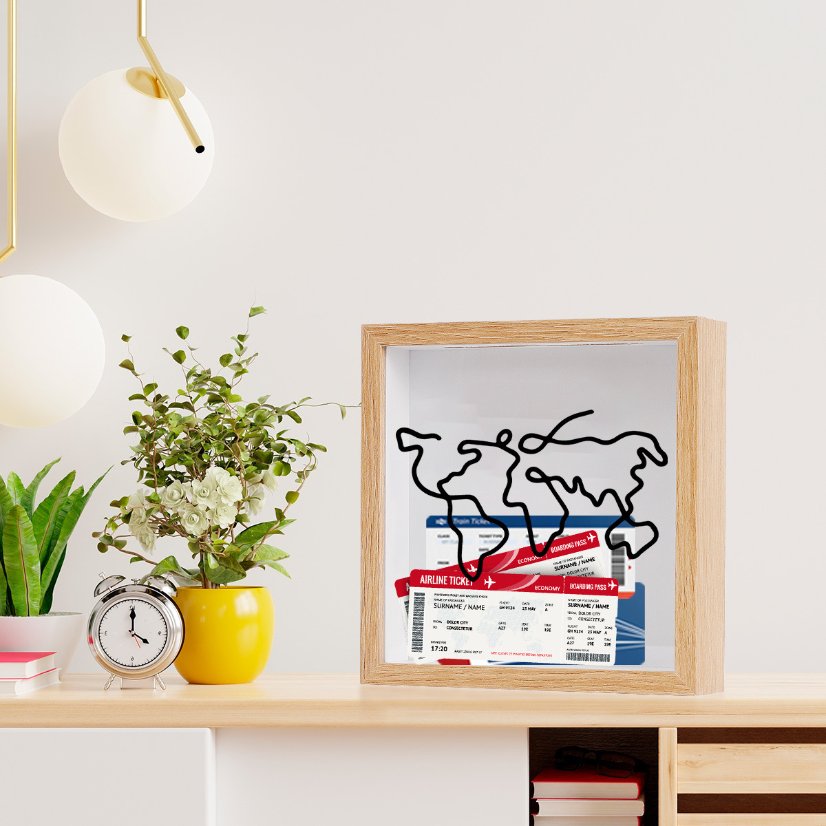
Qingen describes the Ticket Stub Storage Photo Frame with a printable front surface and a map-pattern reference. Its gallery shows a simple map, a more detailed travel motif and a styled display containing tickets. These are useful design references, but a buyer needs a controlled artwork record before using one as an order instruction. This article separates graphic placement from the frame dimensions and from the contents that may later be collected inside.
Name each surface before assigning the artwork
Give the front sheet and the background separate labels in the artwork enquiry. Ask the supplier where the map or other motif is placed in the offered reference and whether another component carries part of the design. Keep the response attached to an annotated view. A visible shadow or apparent gap between a graphic and a background is not a reliable substitute for that explanation.
The listing describes customisable patterns, but it does not provide a manufacturing drawing for the buyer proposed design. Treat a new graphic as a request until the supplier confirms the relevant surface and arrangement. Do not transfer assumptions from another frame family or assign a printing method because a black line appears sharp in a catalogue photograph. The record should identify what has been confirmed and what remains an open production question.
Control the viewing side and orientation explicitly
Mark the intended front-view orientation and identify which side of the supplied component the supplier is discussing. Where text, an asymmetric symbol or a directional travel motif is proposed, ask for a proof that makes its final reading direction clear. A general instruction such as print on the clear panel can leave the actual side and orientation unresolved. The supplier response should describe the offered arrangement without forcing the buyer to infer it.
Keep the artwork file revision, annotated proof and frame reference together. If the supplier returns a mirrored proof for a production reason, distinguish that file from the customer-facing view and request the explanation needed to review it. Do not assume that a production-side image is the final visible result. An approved front appearance must remain tied to the exact proof version rather than to a loose collection of screenshots.
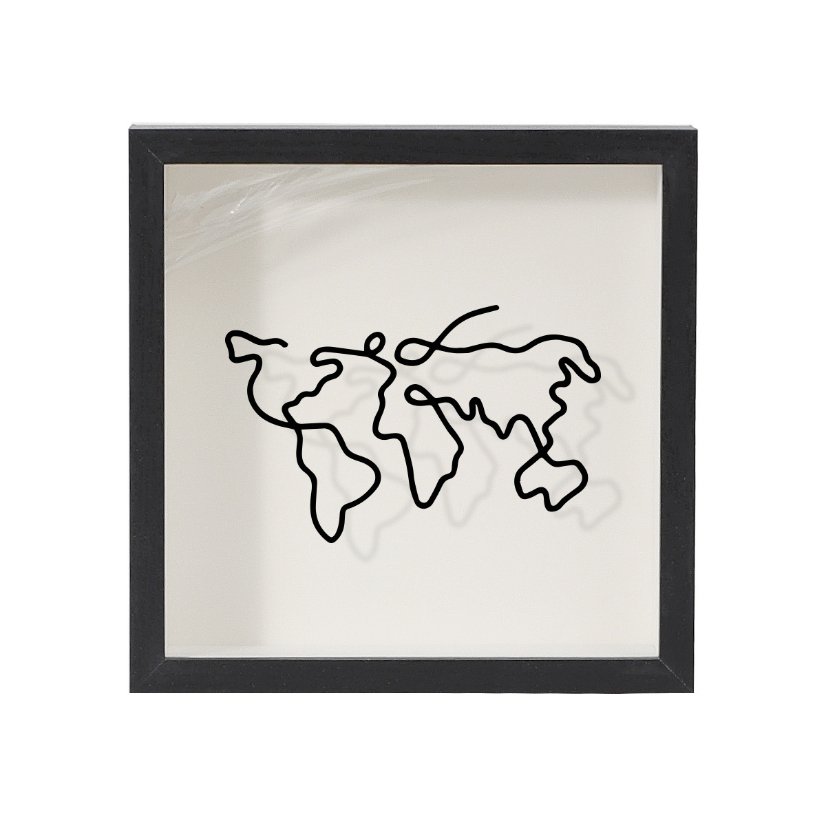
- Name the front sheet and background separately.
- Identify the printed side, final viewing direction and motif revision.
- Keep catalogue styling separate from an approved artwork proof.
Review the graphic and background as separate decisions
The gallery includes map-only and more detailed travel artwork. Identify the requested motif rather than treating every map-style picture as the same design. Ask whether a background is part of the offered product and which background reference accompanies the selected graphic. Tickets shown in a styled room are display contents; their position and quantity should not silently become part of the printed design or the supplied merchandise.
Where a physical sample is requested, record the exact sample identity and compare its visible artwork with the dated proof. Note the viewing conditions needed to understand the observation. Keep a graphics correction separate from a proposed frame-colour change. This is an appearance decision; it does not prove adhesion, scratch resistance, weather resistance or suitability for any particular preservation requirement. Those properties need their own relevant evidence if required.
| Artwork field | Response to retain | What it does not establish |
|---|---|---|
| Physical surface | Exact component carrying the graphic | A print process inferred from a photo |
| Viewing direction | Annotated final front view | Unexplained mirrored production artwork |
| Background | Included component and selected appearance | Ticket props supplied with the frame |
| Approval revision | File, proof, sample identity and decision | Durability or preservation performance |
Release a proof set that survives a design change
Use a decision register with one line for each graphic-bearing component. Identify the accepted file, printing-side response, orientation and background decision. Mark unresolved items as pending instead of giving the entire design an unexplained approved status. Keep the supplier acknowledgement with the register so another purchaser can establish which version was actually offered and which version was selected.
If a motif, wording or position changes, issue a new artwork revision and identify the affected component. Preserve the earlier proof and its status. Ask whether the change also alters the relationship to the frame opening or background, rather than assuming that it is a purely cosmetic substitution. This produces a traceable artwork master without rewriting the separate entrance specification, retrieval record or commercial offer.
Frequently Asked Questions
Does the front image identify the printing surface?
Not conclusively. Ask the supplier to identify the actual component and side used for the offered design.
Are all map designs one artwork reference?
No. Keep the simple map and the detailed travel motif distinguishable and identify the selected file revision.
Do pictured tickets form part of the graphic or supply?
They are catalogue display contents unless the supplier specifically confirms another scope. Keep them separate from the artwork master.
Does appearance approval establish print durability?
No. A visible design observation is separate from any material or print-performance requirement and its evidence.
Reference the ticket storage frame when sending the artwork map. Consult the Qingen blog and contact the supplier with the selected motif, component labels and proof questions.