
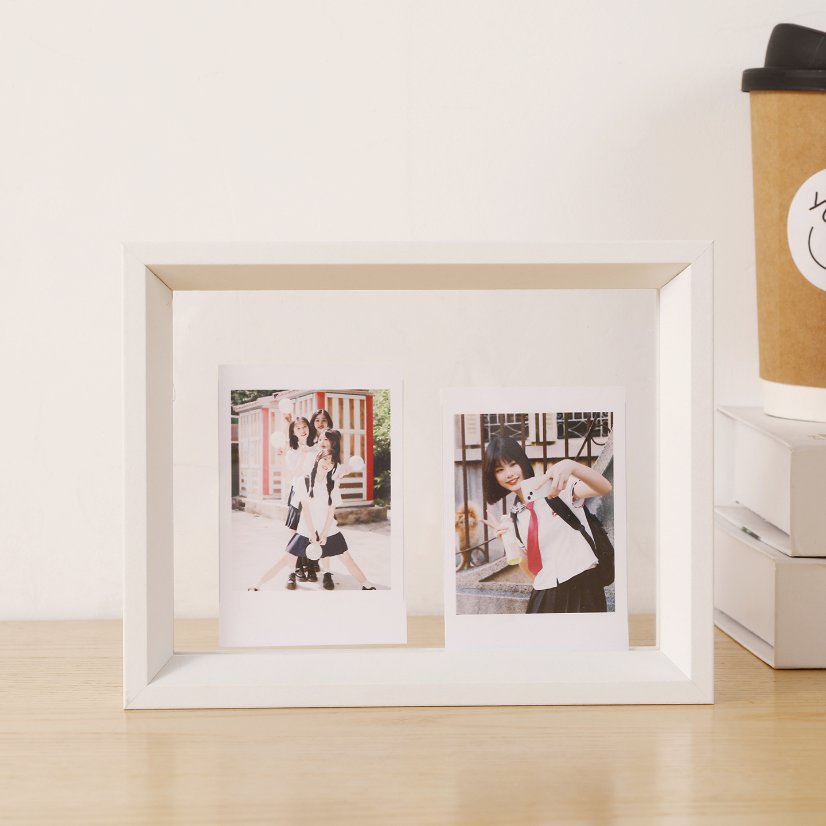
If a specimen-frame delivery occurs, compare an identifiable received frame with the exact approved reference and record the visible differences supported by actual files. Keep delivery status, observation, uncertainty and buyer disposition in separate fields. A difference record is not a finding of damage, an explanation of transit conditions or an entitlement to compensation. Where no delivery is observed, the form remains a prepared record without receiving results.
Qeframe’s historical Transparent Specimen Display Frame page supplies the catalogue reference for this buying discussion. Its reviewed image illustrates one frame with example photo inserts. It does not establish that a real specimen, butterfly, photograph or accessory is supplied. The page’s material wording also cannot be used here to resolve an acrylic-versus-glass question. A visual receiving record should identify observations without inventing a layer composition or preservation result.
Define which item would be compared
Record the purchase or enquiry reference actually supplied by the buyer, then identify the received item using available supplier and buyer identifiers. If the delivery has not occurred, say that clearly and leave received-item fields unpopulated. If an item is present but its relationship to the offer is unclear, make that uncertainty the first question. Similar transparent frames in a catalogue do not establish which version was received.
Keep the catalogue reference, the actual offer and the received-item record distinct. The catalogue link opens the discussion; the offer identifies what was proposed; the receiving record describes an actual item if one is received. Combining them into one unqualified product label would hide the very identity question the buyer needs to resolve.
Choose an applicable comparison reference
Use the specific supplier reference approved for the relevant purchase scope, if available. Record its file or sample identifier, revision and approval information. If the only available picture is an early catalogue illustration, identify it as such. Do not silently grant it the status of an agreed production reference, a packing specification or a measured dimensional record.
If several reference files exist, identify which one supports each comparison question. A drawing may name a frame version while a catalogue photograph shows an illustrative arrangement. Neither should automatically replace the other. Preserve uncertain applicability where the documents do not explain the relationship, and ask the supplier to clarify the relevant reference before a broad conclusion is recorded.
Use a neutral observation structure
Record section | Actual entry to retain | Limit on the conclusion
Delivery status | Observed receipt, not observed or unknown | Preparing a form does not prove a delivery
Frame identity | Available item and offer references | Visual resemblance does not establish version
Comparison reference | Specific approved record or stated missing approval | Catalogue illustration is not automatically an agreed standard
Visible difference | Named area and actual comparison files | An observation does not determine defect or cause
Evidence gap | Missing file, unclear item or unavailable detail | Missing evidence is not a confirmed physical failure
Clarification and disposition | Actual response, buyer decision and date | No automatic remedy or compensation entitlement
Describe the visible area and the files used, rather than beginning with a quality verdict. For a hypothetical future comparison, the question might concern whether a particular visible feature differs between an identified received-item image and a named approved reference. The record must not turn that example into a claim that such a delivery or difference has actually occurred.
Keep photo roles separate
Label received-item files separately from catalogue images, approved reference files and any supplier illustrations. Preserve the actual files with their identifiers. If someone sends a replacement image, record whether it supersedes a named file or simply adds another view. A copied filename cannot establish that an image depicts the delivered frame.
Reviewers should state what can be seen and what remains unclear. A transparent appearance does not establish a material grade or thickness, and an image containing an insert does not establish the supplied contents. If a missing detail matters, request evidence addressing that particular question without claiming that further photographs or documents will be available. Do not propose opening, mounting or treating the frame to create evidence.
Separate frame and packing observations
A frame observation and a packing observation concern different evidence. If a buyer has actual files for both, give them separate entries and preserve the link to the item concerned. An appearance difference does not establish that packing caused it, that transit protection failed or that a particular packaging layout was used. Such explanations require evidence beyond the comparison itself.
This record does not replace the separate request for a pack drawing. A drawing describes a proposed or approved arrangement within its stated scope; an actual receiving file records what is observed. Keep a proposed arrangement from being treated as proof of the arrangement used in a delivery, just as an illustrative specimen should not become a confirmed supplied article.
Ask for clarification without rewriting the history
Send the supplier the item reference, comparison reference, neutral observation and specific evidence gap together. Ask which reference applies and whether the supplier has information relevant to that difference. Preserve any explanation as an attributed response. Do not convert an unanswered question into a finding about manufacturing, transit, handling or responsibility.
If a later response identifies a different comparison reference, add the new relationship and retain the earlier record. A revised comparison should show which evidence changed. This is more useful than deleting the initial uncertainty, because colleagues can then distinguish an original observation from a later interpretation and see why a buyer decision was updated.
Record a bounded buyer decision
The buyer’s disposition should name the evidence reviewed and its unresolved limits. It may concern a clarification request or the sufficiency of the present files. Do not invent an acceptance, rejection, settlement or delivered condition. Keep the decision date and reviewer separate from the date of a photograph or a supplier email so later readers can reconstruct the sequence accurately.
A closed administrative task does not certify the frame’s performance, safe condition or preservation suitability. The point of the record is to make actual observations traceable to applicable references, while retaining gaps that could change the interpretation. That remains useful even when the only honest outcome is that more attributable information is needed.
Frequently asked questions
Does the catalogue image prove that a specimen is included?
No. Example inserts and props illustrate the catalogue presentation. Supplied contents require an applicable offer or other explicit evidence, separately linked to the purchased frame reference.
Can a visual comparison settle the frame’s material layers?
No. Keep unresolved material descriptions open and request the supplier’s product-specific information. Appearance alone cannot resolve an acrylic-versus-glass description or establish a layer composition.
What if no delivery has taken place?
Mark the record as prepared for possible future use and leave receiving results absent. Do not add fictional delivery dates, quantities, differences or inspection decisions to make the form appear complete.
Does a difference establish transit damage or compensation rights?
No. A supported observation, its cause and any commercial remedy are separate questions. This record does not determine any of them beyond the actual observation and attributed responses retained in the file.
Use the product reference to open the discussion
Ask Qeframe to identify the current offered specimen-frame version against the historical page. If a delivery later occurs, retain the actual item identifiers and applicable comparison reference before recording differences. Keep visual observations separate from assumptions about contents, materials, packing and outcomes.
Product reference
https://qeframe.com/product/transparent-specimen-display-frame/
Contact the supplier
https://qeframe.com/contact/
Related buying articles
https://qeframe.com/blog/