
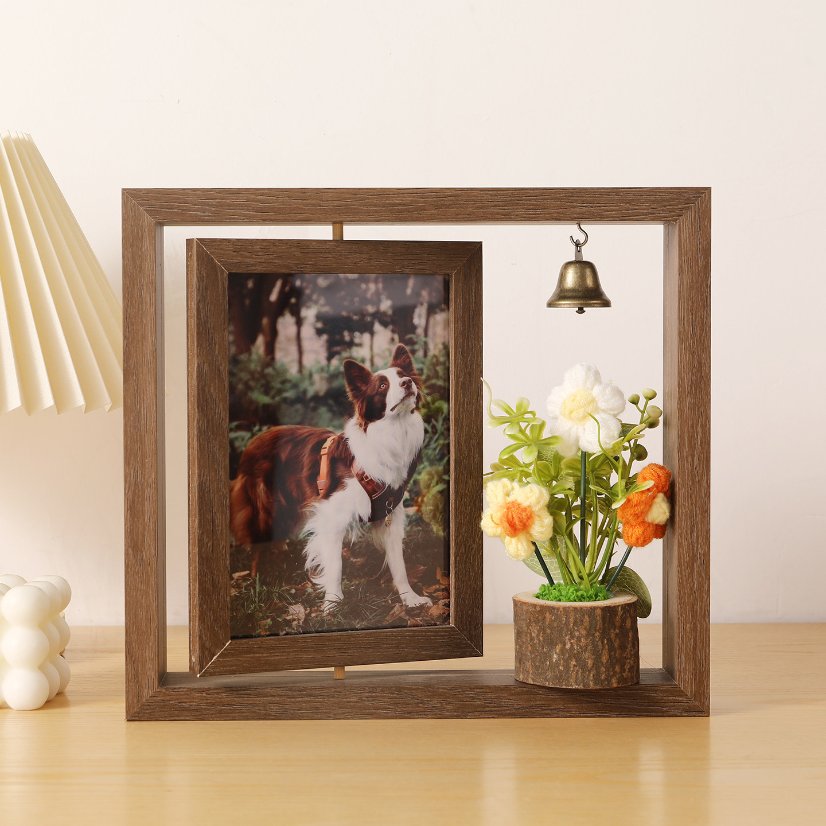
Ask the supplier to link each stated finish description to named areas of the exact rotating frame offered, using an identifiable drawing or photograph reference. Keep unspecified areas open. A catalogue image can identify the product example, but it cannot establish finish composition, a coating process or the same treatment on every visible and hidden component.
Qeframe’s historical Double-sided Rotating Pet Photo Frame page is the catalogue anchor for this guide. The reviewed image supplies product-reference context, not verified wood, metal or another material identity. This buyer task maps the scope of finish wording. It is separate from supplied-part records, portrait pairing, care text, spare-part offers and the commercial terms of a quotation.
Identify one offered item and version
If an actual offer exists, retain its exact frame description, version and item reference. Keep the catalogue cross-reference beside that wording. A buyer’s project name may help organise a discussion, but it should not replace the supplier’s description or conceal a difference between a requested selection and the item actually offered.
Ask which version a finish statement concerns. A reference photograph may show a catalogue example without establishing its relationship to the current offer. Keep that link open where the response is unclear. A familiar frame outline or similar colour does not prove that two versions share the same surface description.
Name areas before assigning wording
Request the supplier’s names or marked references for the component areas relevant to the enquiry. Keep each location tied to an identifiable file. Do not create a technical allocation from appearance alone. An area that looks different may need a separate question, but its appearance does not establish the material, treatment or reason for the difference.
Record the finish wording only within the supplier’s stated scope. If the response expressly says none for an area, retain that answer. If it does not address the area, use unconfirmed rather than none. The distinction prevents a missing response from becoming an invented specification about the frame.
A finish-reference area map
Record field | Supplier evidence to retain | Boundary before confirmation
Offered frame | Exact item and version in the offer | Catalogue-to-offer match open
Area identity | Supplier name or marked location reference | Area not confirmed
Finish wording | Description, none or unconfirmed as stated | No process inferred from appearance
Reference file | Applicable drawing or photograph and revision | Unique reference not established
Statement scope | Areas expressly covered by that response | No whole-frame treatment assumed
Open difference | Unspecified or conflicting area | Question retained without a product conclusion
Disposition | Identified reference, revision requested or held | No production or performance approval implied
Keep the source response with the map rather than replacing it with a shortened internal label. Another reviewer should be able to locate the wording supporting an area. If one statement covers several locations, retain its explicit scope. Do not expand it to every component simply because a summary heading says frame finish.
Separate finish wording from material identity
A surface description and an underlying material statement answer different questions. Do not infer a material from colour or texture, or use an unverified material name to establish its finish. If the supplier provides separate applicable records, keep their references distinguishable and identify any area they do not address.
The same limit applies to catalogue photographs. They can help participants identify the subject without proving a coating chemistry, treatment, thickness or manufacturing process. This guide does not supply those details or verify a supplier declaration independently. Keep an unprovided technical field open rather than adding a familiar industry term to complete the map.
Keep appearance approval within its scope
An accepted reference identifies what the parties reviewed; it does not establish wear resistance, environmental benefit or another performance result. Do not turn finish wording into proof of durability or a test outcome. A clear documentary map can support the next buying question without promising how the product will perform.
Example portraits, inserts and decorative props in a presentation are not evidence of supplied goods. Keep supplied-content questions in their own records. Likewise, a care-card or spare-part response does not automatically confirm a finish description, and a finish map does not establish that an optional service or replacement part is available.
Control a changed area description
If the supplier proposes a new finish description, identify the affected item, area and file revision. Preserve the earlier reference as history. Ask whether the new file replaces or supplements the earlier statement rather than deciding solely from its arrival time. A later illustration may clarify an area without changing the offer.
Keep buyer requests separate from supplier confirmations. A preferred finish written in an enquiry is not evidence that the supplier offers it. If only one area has been answered, leave the others open instead of treating a partial response as approval of the whole frame. The handover should identify the exact offer, confirmed area references, finish wording and remaining questions.
No production, treatment, cleaning or testing procedure is supplied here. The record also must not claim that frames have been made, finished or delivered. Those later facts require their own evidence if a transaction proceeds. Its value is a traceable statement of scope, with an understandable gap wherever the supplier has not yet provided an applicable answer.
Frequently asked questions
Does a similar-looking surface establish the same finish everywhere?
It does not establish the scope of a supplier statement. Ask which areas and version the description covers. Keep hidden or unanswered areas open rather than extending a visible appearance into a whole-product specification.
Can a finish description verify wood or metal identity?
They are separate questions. Keep any material statement within its own applicable reference and scope. A photograph, texture or surface description does not independently establish the substrate, composition or authenticity of the frame.
What should the buyer record when an area is not mentioned?
Use an unconfirmed state and identify the unanswered location. None should reflect an express applicable response, not an omitted field. The map should preserve the evidence gap without creating a positive or negative product-property claim.
Does accepting the area map establish durability?
No wear-resistance or other performance result follows from identifying finish wording. Keep technical outcomes within their own applicable evidence. This guide provides no coating, treatment, cleaning or testing instructions and no environmental-benefit guarantee.
Product reference and enquiry
Identify the historical catalogue frame at https://qeframe.com/product/double-sided-rotating-pet-photo-frame/
Provide the exact offered item and unresolved area-reference questions through https://qeframe.com/contact/
For related buyer-reading context, see https://qeframe.com/blog/