
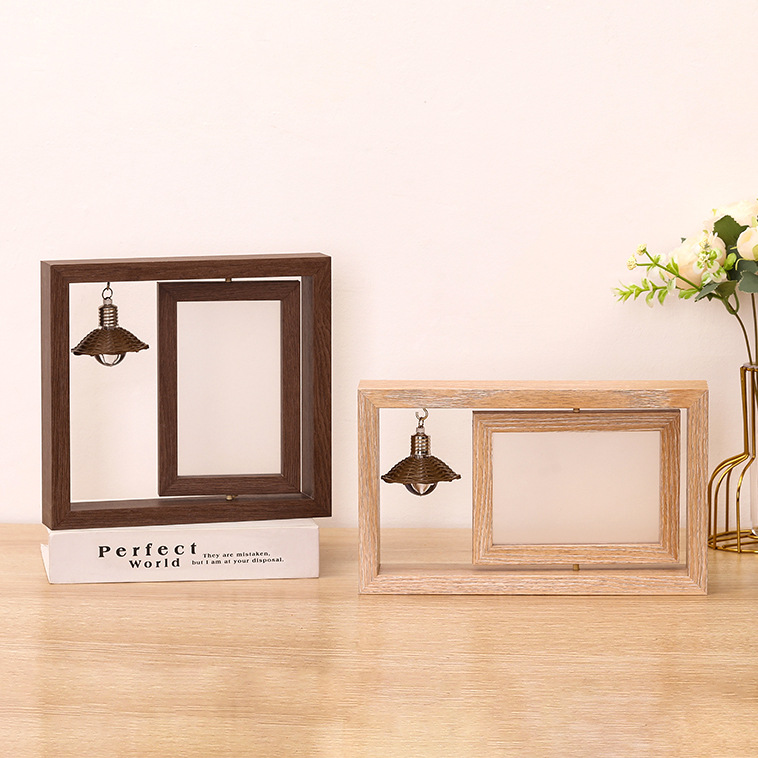
Rotating Frame Samples: Check Both Faces and Parts
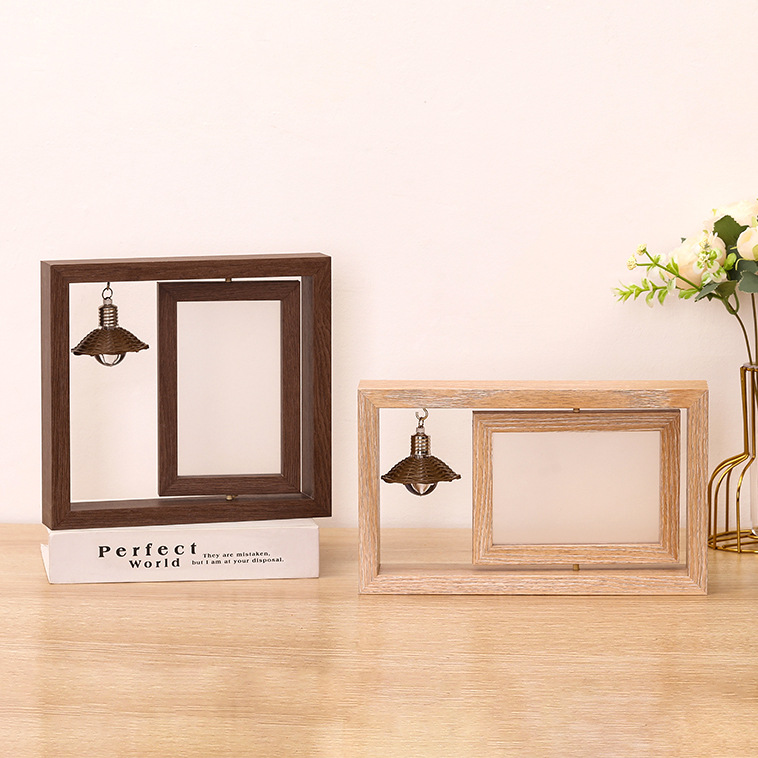
Review a rotating photo frame as a complete assembly. Check both display faces, the photo replacement method and clearance around the inner frame and selected ornaments. Record which decorative parts are included and retain an approved sample. A front catalogue image alone does not establish the final configuration or a durability rating.
A rotating frame can combine a moving inner display with a decorative hanging feature. For a wholesale MDF picture frame buyer, approving only the finish leaves several practical questions unanswered. The sample record should identify the complete configuration, explain how photographs are fitted and distinguish an observed movement from a claim about long-term operation or load capacity.
Identify the complete catalogue configuration
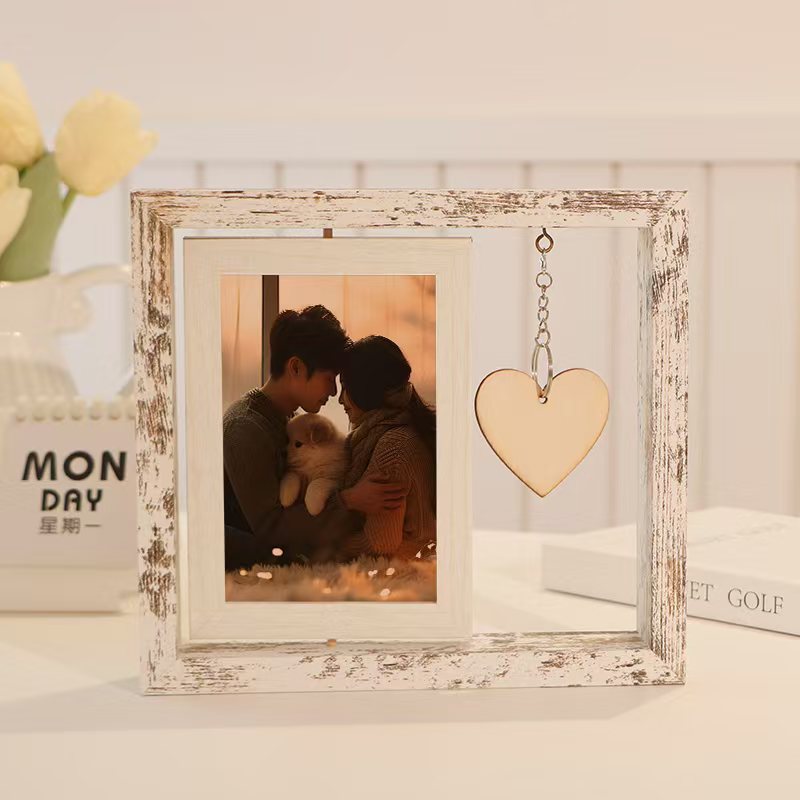
Qingen Frame’s personalized rotating frame is described as paper-covered MDF with an inner frame and two display faces. The catalogue shows more than one decorative arrangement. Record the product reference, orientation, selected finish and ornament together so the approved sample is identifiable without relying on a generic rotating-frame name.
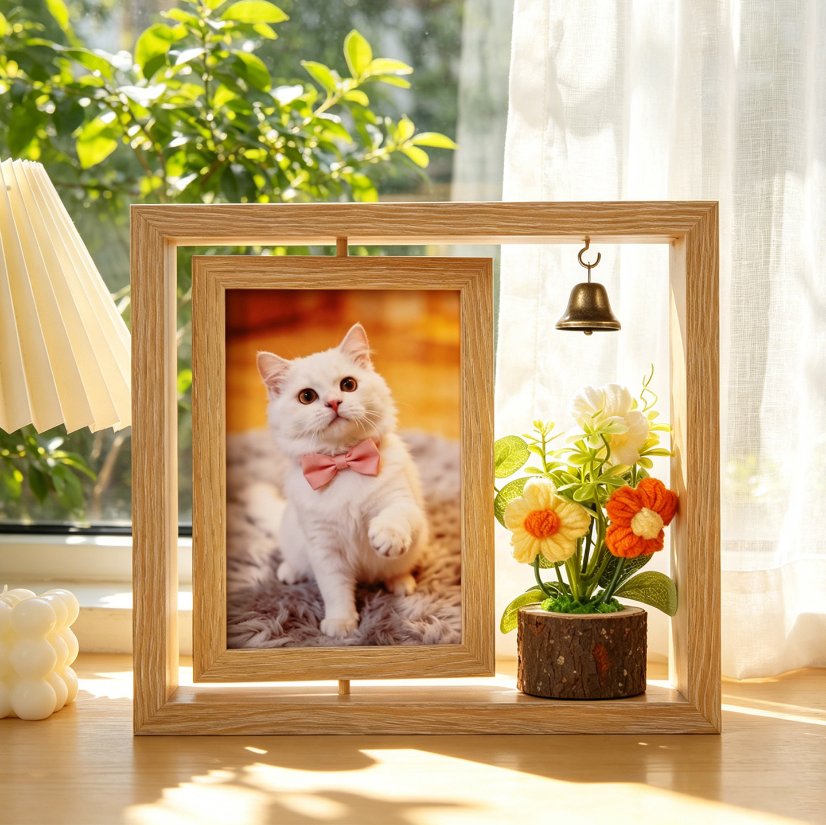
The pet photo frame reference shows a related arrangement with a bell and decorative plants. Keep that configuration separate unless the supplier confirms a shared specification. A buyer may select an appearance, but the quotation still needs to state which frame, ornament and other components form the supplied unit.
- Product reference, orientation and selected finish
- Both photo faces and loading method recorded
- Observed clearance tied to the complete assembly
- Ornament and optional parts listed separately
Review both photo faces and the loading method
Fit the intended photo or a clearly identified sample insert on each side. Record its dimensions and the area that remains visible after assembly. Photograph the front and reverse using the same sample identifier. Ask which sheets or retainers are supplied with the selected version rather than inferring their material or thickness from the clear appearance of the display.
Have the supplier demonstrate how photographs are replaced and how the assembly is secured afterwards. Record any tools or separate components required. Avoid inventing an opening sequence from a front photograph. If the buyer changes the insert material or thickness, request another fit discussion; an approval for one paper insert does not establish compatibility with every possible display material.
| Sample check | Record | Leave pending until confirmed |
|---|---|---|
| Two faces | Insert size and visible area | Supplied transparent parts |
| Access | Demonstrated replacement method | Tools or loose components |
| Movement | Observed clearance and configuration | Any required performance evidence |
| Decoration | Selected ornament and assembly photo | Included props or optional lighting |
Observe clearance under agreed sample conditions
Ask the supplier to demonstrate the intended inner-frame movement on the complete selected sample. Watch the relationship between the moving frame, outer surround and hanging ornament. Record any visible contact and the conditions of the observation. Do not force the assembly beyond its intended movement or create an unsupported cycle test based on a catalogue rotation description.
Keep horizontal and vertical versions clearly labelled. An arrangement that clears an ornament in one orientation may need a separate review when the frame size or accessory changes. If the supplier proposes a revised hook, pivot or decoration, request an updated assembly view. The approved appearance and observed clearance should remain linked to that exact configuration.
List decorative and optional parts explicitly
Create a component list covering the outer frame, inner display, supplied transparent parts and selected hanging ornament. Mark decorative plants, printed photographs and background props as included, excluded or pending confirmation. Catalogue styling is not a substitute for this list. A blank field should remain a question instead of becoming an assumption in the purchase order.
The catalogue mentions different decorative options, including a lighting design. Quote such a version separately if required and request its complete specification and applicable evidence. A lampshade-shaped ornament in a photograph does not establish that a functioning lamp is supplied. This guide makes no electrical, load, movement-life or durability claim for the pictured arrangements.
Close the sample review with a dated decision
Record accepted points and requested changes separately. Retain photographs of both faces, the selected ornament and the complete assembly, together with the sample revision. If a change remains open, identify who must confirm it. An informal message saying the frame looks good may be insufficient to tell the supplier which of several catalogue arrangements was accepted.
Before ordering, match the accepted configuration to the quotation and packing proposal. Ask for product-specific commercial terms rather than relying on general website promises. Use the product catalogue as a selection reference, while keeping the physical sample and written response as the record of the assembly actually reviewed.
Frequently Asked Questions
Does a rotating description establish durability?
No. A sample demonstration records observed movement. Any required durability evaluation needs an agreed method and supporting evidence.
Are all ornaments in the catalogue included?
Confirm the exact selected configuration. Related images can show alternatives, while background props may be styling only.
Can one orientation approve another version?
Keep the configurations separate. A different orientation, frame size or ornament can change the assembly and should be reviewed where relevant.
Request a complete sample configuration through the Qingen Frame contact page. Read the supplier blog for more procurement topics.