
Grid Mat Drawings: Locate Every Photo Opening
For a grid photo frame quotation, request a dimensioned mat drawing that locates every aperture from agreed reference edges. Each opening needs an identifier, horizontal and vertical endpoints, and a clear measurement convention. Keep catalogue format labels separate from confirmed opening dimensions until the supplier identifies what each label describes and returns a consistent drawing.
Give the enquiry a drawing reference
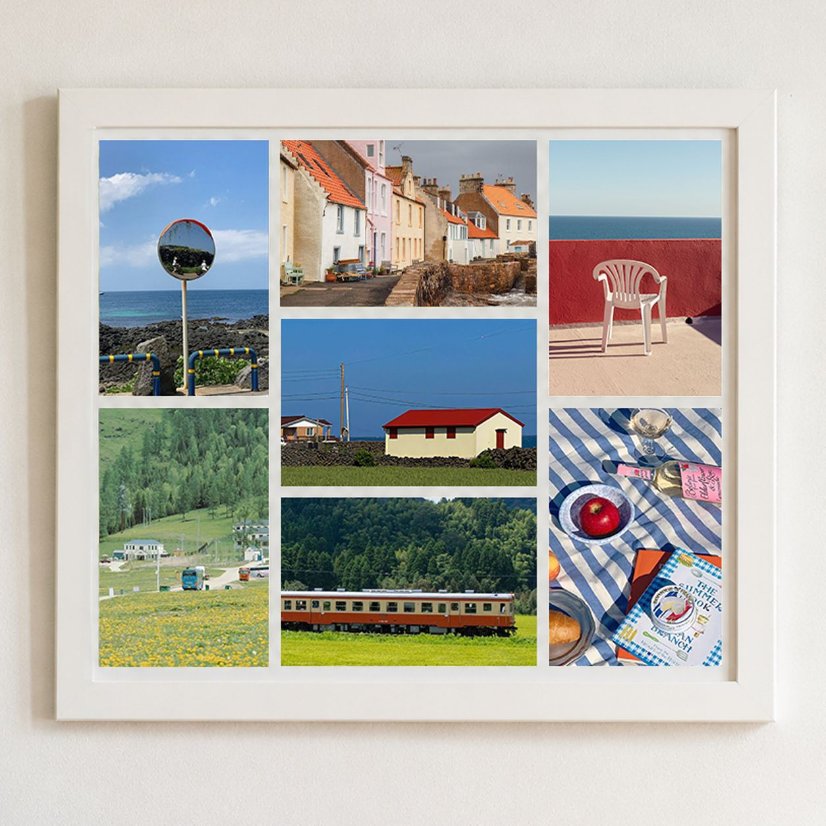
Qeframe’s product page describes six-grid and seven-grid photo frame variants and mentions 6×6, 7×7 and a separate 6 inch photo size. Treat these as catalogue references for the enquiry. They do not establish the aperture count, measurement units, opening dimensions or the relationship between an insert and the visible cutout.
The purchasing task is to replace that ambiguity with a drawing the buyer and supplier can discuss without pointing at a photograph. The enquiry should let a reviewer locate each opening, understand its stated size and identify exactly which unanswered dimension prevents quotation or sample approval.
Agree the view before placing dimensions
Start by naming the frame variant being quoted and ask for a drawing of its actual mat arrangement. Identify whether the drawing shows the front or rear face and mark the intended top edge. A rear view can reverse an apparently familiar arrangement, so do not accept an orientation that depends on how somebody happens to hold the sample.
Choose the reference edges with the supplier. A stated outer corner can establish the origin, with the drawing showing the direction in which horizontal and vertical coordinates increase. Name the physical edges used as datums. If a coordinate starts from the frame instead of the mat, require that distinction to appear beside the dimensions.
• Selected mat variant, drawing face and intended top edge
• Named datum edges and declared measurement units
• Aperture identifiers with unanswered dimensions kept pending
Locate every aperture from the same origin
Give every actual aperture its own drawing identifier, even when several appear similar. The supplier should confirm the complete identifier list against the selected variant. Do not derive that list from the words six-grid or seven-grid. An identifier should follow the opening between the drawing and the dimensional reply, rather than describe a packing position or sales assortment.
Request the horizontal coordinates of the near and far cut edges, followed by the corresponding vertical coordinates. These endpoints locate the opening without relying on an unexplained chain of gaps. The supplier can show gaps as supporting information, but should explain any coordinate that uses a different origin. Identify rotated openings explicitly so their horizontal span is not confused with photo orientation.
Drawing field | Buyer request | Supplier reply needed
Variant and view | Identify the offered mat arrangement, shown face and top edge. | Confirm the variant and drawing orientation.
Origin and units | Name the physical datum edges and coordinate directions. | Declare the origin, units and reference features.
Aperture identity | Assign an identifier to every actual opening. | Confirm the complete identifier list on the drawing.
Horizontal and vertical endpoints | Locate both cut edges along each coordinate direction. | Enter coordinates and identify every dimension endpoint.
Outline and quotation scope | Flag shaped corners, rotated openings and requested changes. | Clarify the outline, unresolved dimensions and quoted arrangement.
Define what each dimension touches
Ask whether an aperture dimension runs between the visible inner edges on the shown face or between another pair of physical features. The answer belongs on the drawing. A dimension written beside an opening without extension lines can otherwise be mistaken for an insert size, a photograph size or a distance to the next aperture.
Where corners are rounded, angled or otherwise interrupted, ask the supplier to show the intended outline and identify the dimension endpoints. Clarify whether the stated span reaches the straight edge portions or the extreme outline. If a sample differs from the drawing, record the observation against that opening and endpoint definition. Do not estimate dimensions by measuring pixels in the product photograph.
Make the quotation reply comparable
Send the dimensional request with the selected catalogue reference and ask the supplier to enter the proposed values, declared units and any unresolved definitions. Keep requested dimensions distinguishable from supplier-confirmed dimensions. When a requested arrangement differs from the offered variant, ask the supplier to identify the changed apertures and explain whether its quotation covers the existing arrangement or the requested revision.
Resolve contradictions before treating the price as comparable. The endpoint coordinates and stated aperture spans should describe the same geometry. If they disagree, return the affected entries for clarification rather than choosing whichever value seems plausible. Ask the supplier to state any proposed dimensional acceptance criteria separately; the enquiry itself should not invent tolerances or imply that an unstated criterion has been accepted.
Ask for a complete dimensional reply
A useful grid mat enquiry gives the supplier a location problem it can answer precisely: which opening, measured from which edges, between which endpoints, on which drawing view. Use the product page to identify the catalogue variant, contact the supplier for the dimensional reply and use its blog for background. Approve the resulting geometry only after the open definitions are resolved.
Frequently asked questions
Can the catalogue photo size become the aperture size?
Do not make that substitution automatically. Ask the supplier to identify whether the catalogue label describes a photograph, insert, mat opening or another feature. Request the aperture dimensions independently using the agreed endpoint convention. Keep the catalogue wording in the enquiry so the supplier can explain the relationship without silently changing the reference.
What if the supplier sends opening sizes without coordinates?
Return the drawing with the missing location fields identified. Opening sizes alone cannot establish where the cutouts sit relative to the mat edges. Ask for endpoints from the agreed datums, or a clearly defined alternative that locates every opening. Do not fill the missing positions from the photograph or assume repeated gaps are equal.
How should a revised aperture be handled during quotation?
Keep its identifier and describe the changed endpoints or outline explicitly. Ask the supplier to distinguish the earlier arrangement from the revised proposal and confirm which version its quotation covers. Review the connected coordinates before approval, because moving a cut edge can alter the adjacent gap even when another opening remains unchanged.
Product and contact references
Grid photo frame product reference: https://qeframe.com/product/six-grid-and-seven-grid-photo-frames/
Discuss the dimensioned drawing: https://qeframe.com/contact/
Qingen procurement articles: https://qeframe.com/blog/